

How to create, edit, and delete Relays
Every Relay follows the same flow: Trigger → Conditions → Actions. For a full reference of every trigger, condition, and action, see the Relay building blocks page.Don’t see the Relays module? Relays are Admin-only by default. Ask your admin to grant Relay Management in Team Management. See Relays overview for plan requirements.
How to create or edit a Relay
1. Visit the Relays module
Your first visit to Relays opens the Relay Templates board. Pick a template to start from, or click Add Relay to build from scratch. See Relay templates for all 58 and what each one does.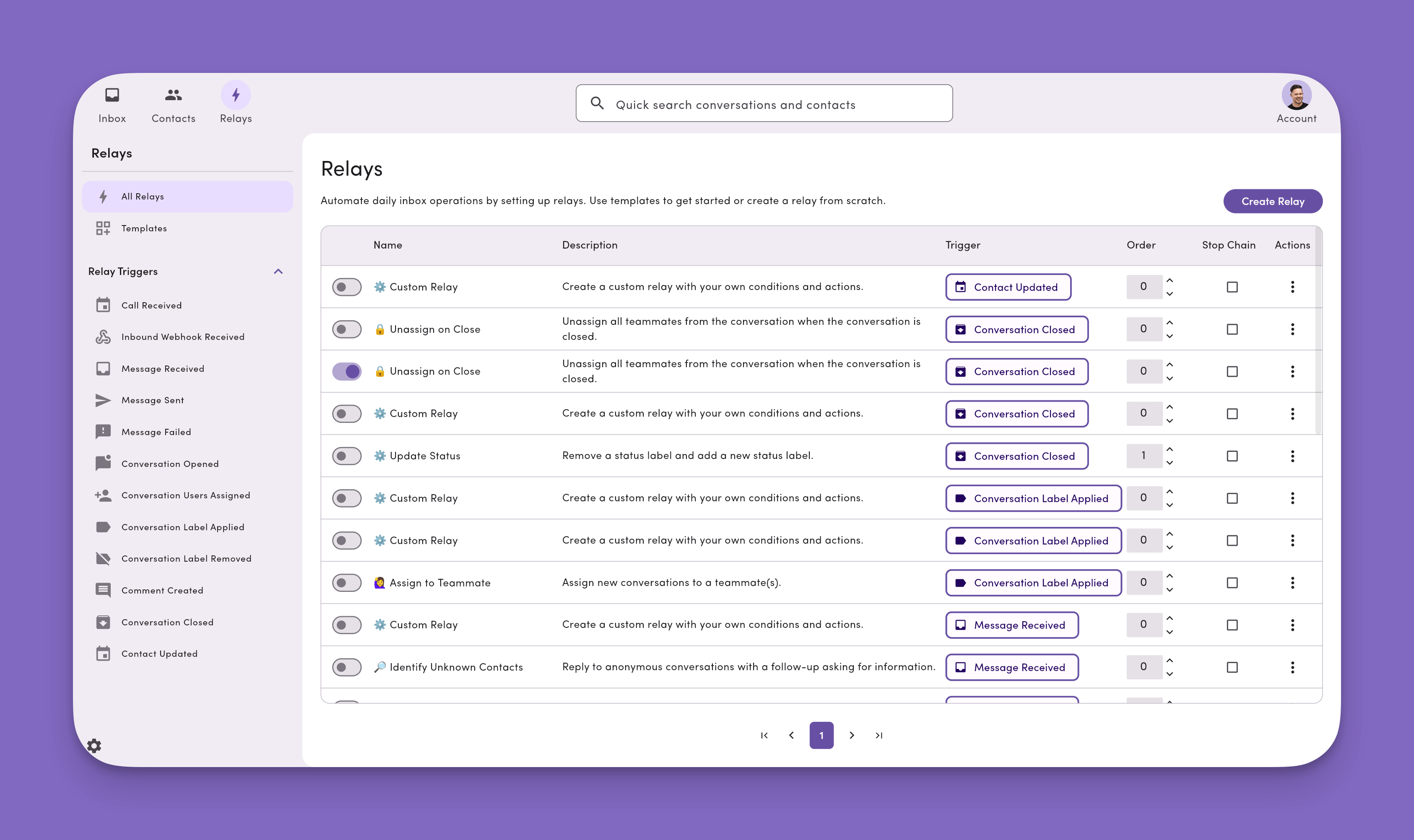
By default, new Relays are paused. Toggle them On when you’re ready.
1a. Order your Relays
Within a Trigger group, Relays execute top-down in Order. Ordering matters when more than one Relay’s conditions match the same event. For example, a keyword auto-reply and a generic after-hours reply that both listen for Message Received. To change the run order, use the Order column:- Click the up or down arrow on the vertical counter to move a Relay one position, or
- Click the number and type the exact Order value you want.
All matching Relays run. If multiple Relays in a Trigger group match the same event, every one of them runs in Order. A higher-priority Relay does not stop later Relays from evaluating.
2. Name and describe your Relay
Click the vertical ⋯ (three dots) next to a Relay to Rename, Edit description, or Delete.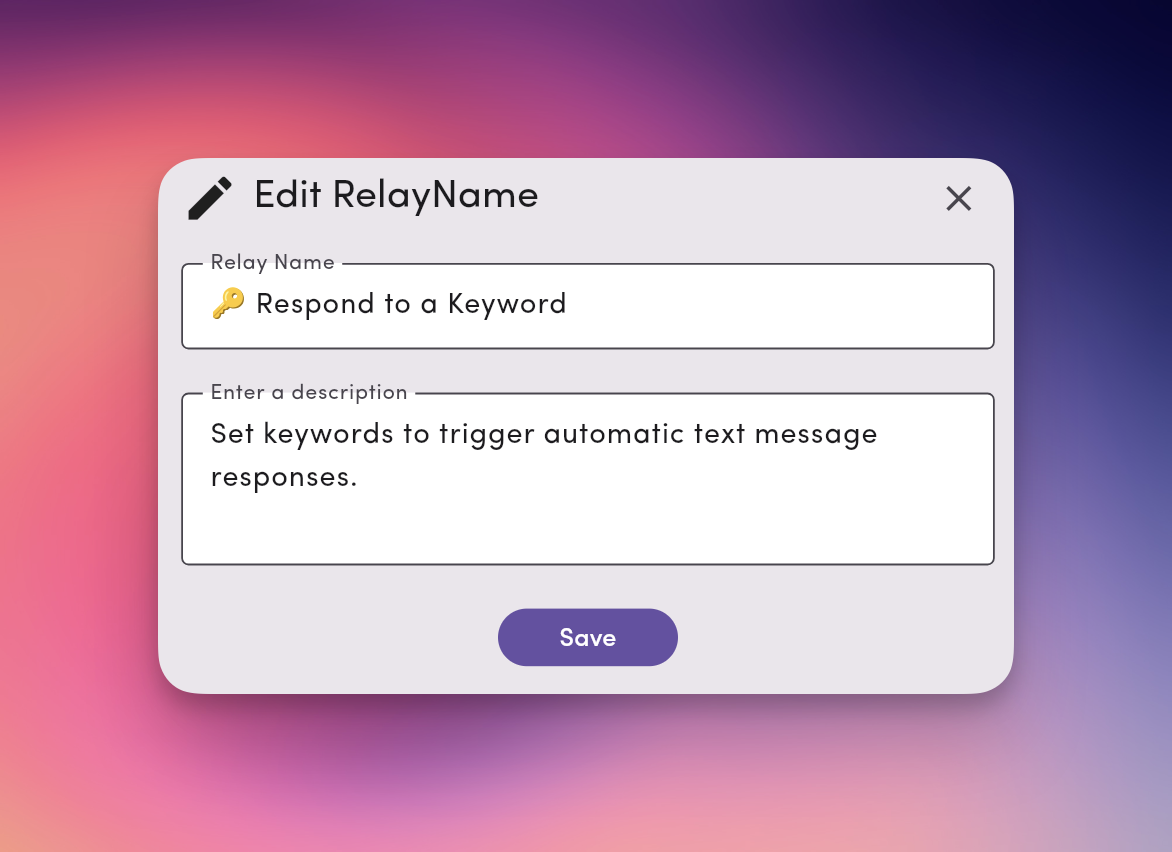
3. Set a Trigger
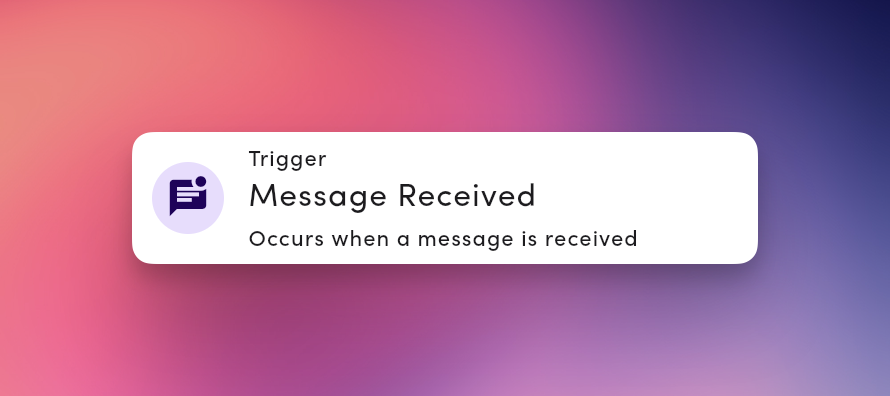
Pick the event that starts the Relay. Fourteen triggers are available. Three of them fire against a contact rather than a conversation: Contact Created, Contact Updated, and Inbound Webhook Received. Conversation-scoped conditions and actions don’t apply to those. See Relay building blocks for what each trigger fires on and which ones carry restrictions.Templates include the Message Received trigger by default.
Changing the trigger on an existing Relay. If you switch a Relay’s trigger, MessageDesk removes any conditions the new trigger can’t support. The app shows a warning with a count before you save (for example, “Changing the trigger will remove 1 incompatible condition from this relay”). MessageDesk also removes any Event Data values used as inputs on existing actions, because those fields don’t exist on the new trigger’s event. Review your conditions and action inputs after switching triggers.
4. Add Conditions
Conditions control where and when a Relay runs. Add as many as you need and combine them with AND or OR. Which conditions you see depends on the trigger. Eight are always available, and a few are scoped to a single trigger. See Relay building blocks for the full list, including the operator selector on Conversation label equals and the difference between the three label conditions.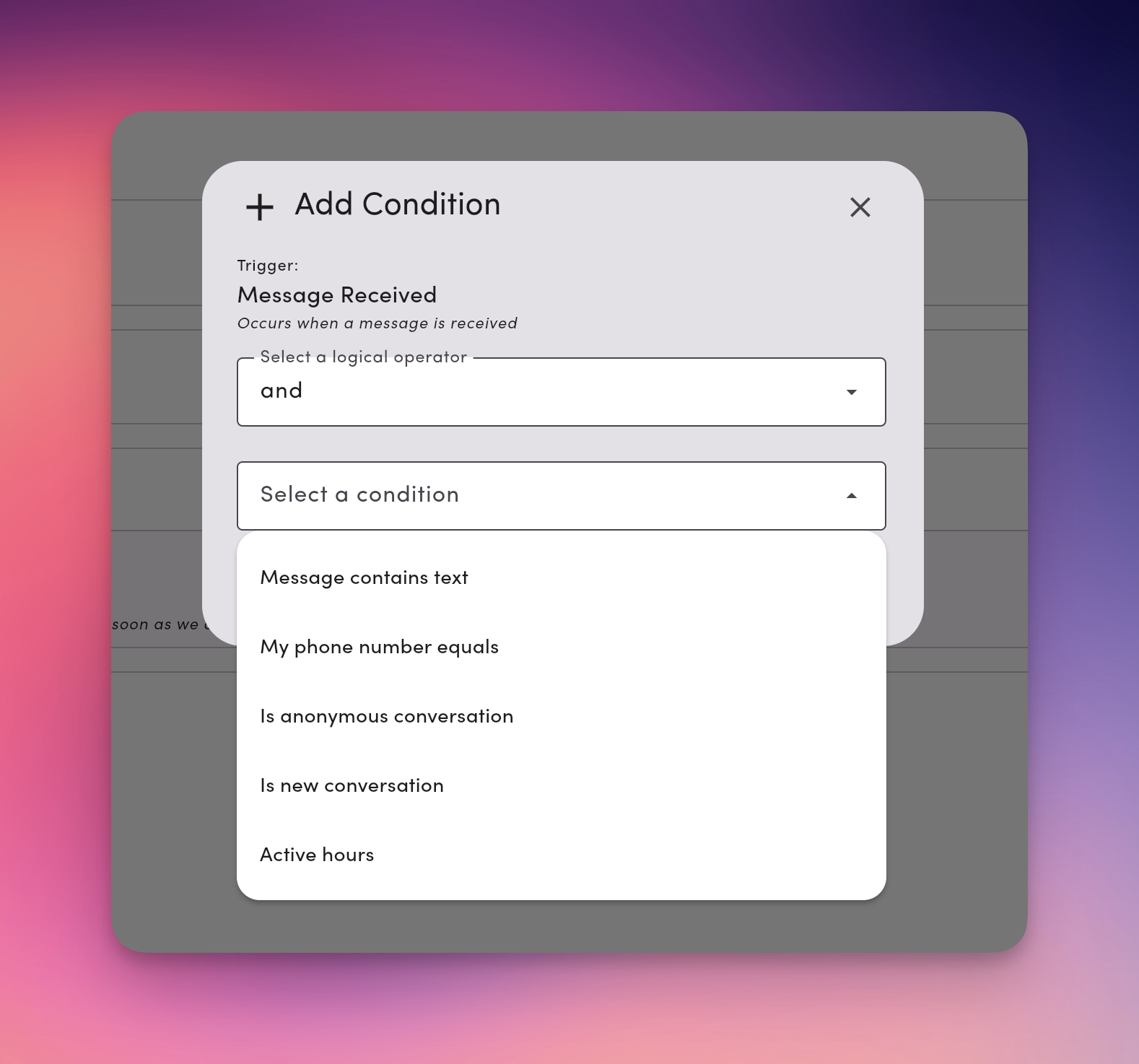
5. Add Actions
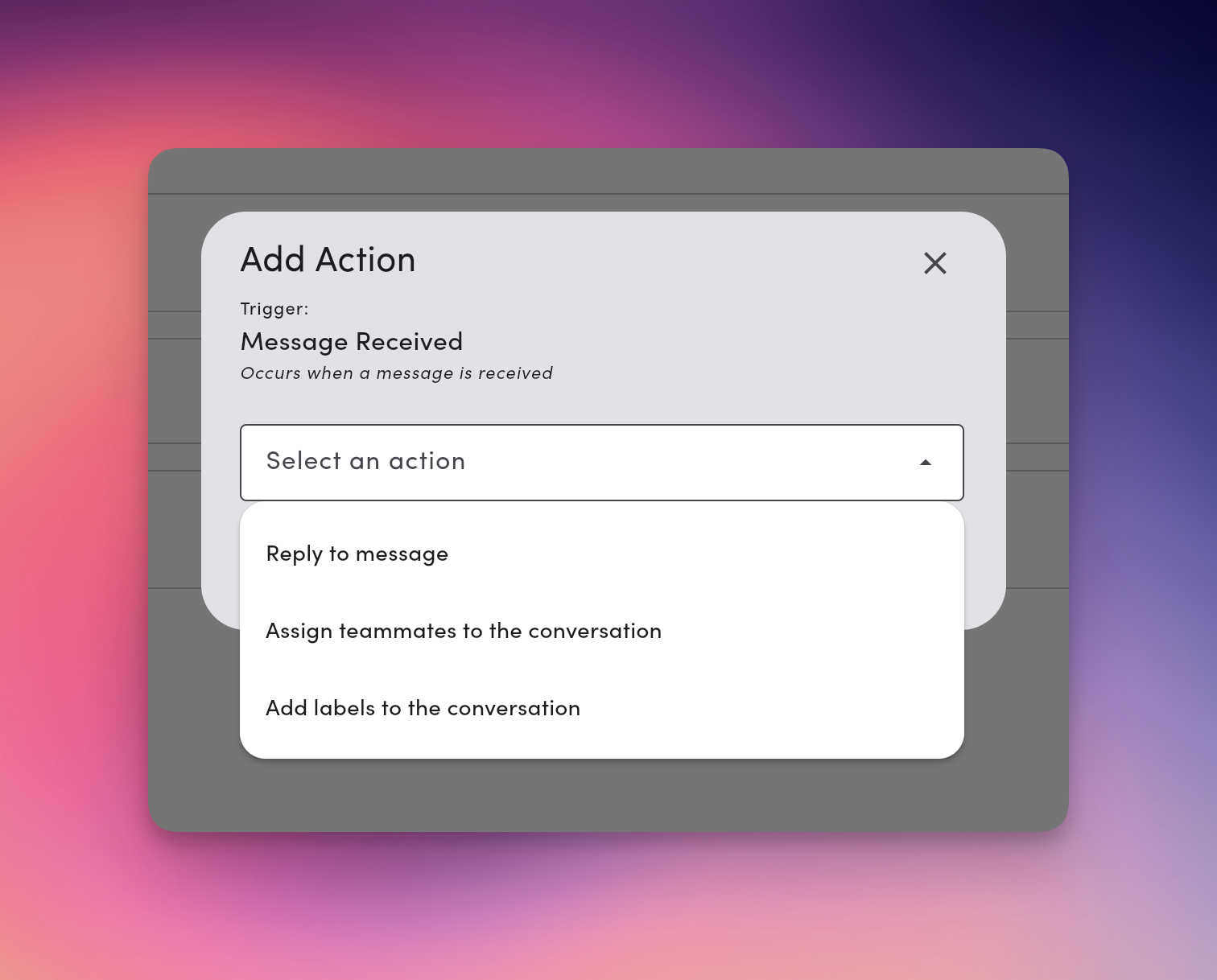
Actions run when the conditions match. Add one or many; they execute top-to-bottom in the order you add them. Chain them freely: Reply, Assign, and Label in a single Relay is a common combination. The Add Action menu varies by trigger, so check it for the trigger you picked. See Relay building blocks for every action and which triggers it appears on. Two things worth knowing while you build:- Delays. Add a Delay to Reply to message to wait minutes or hours before sending. Delays are how you stop duplicate auto-replies inside a tight back-and-forth.
- Event Data or Custom Value. Send Message, Send Comment, and Update Contact Property can pull a value from the triggering event instead of using fixed text. Pick an Event Data property, or choose Custom Value to type your own. See Event Data.
6. Activate your Relay
Use the toggle to turn the Relay On. You can pause anytime without losing your setup.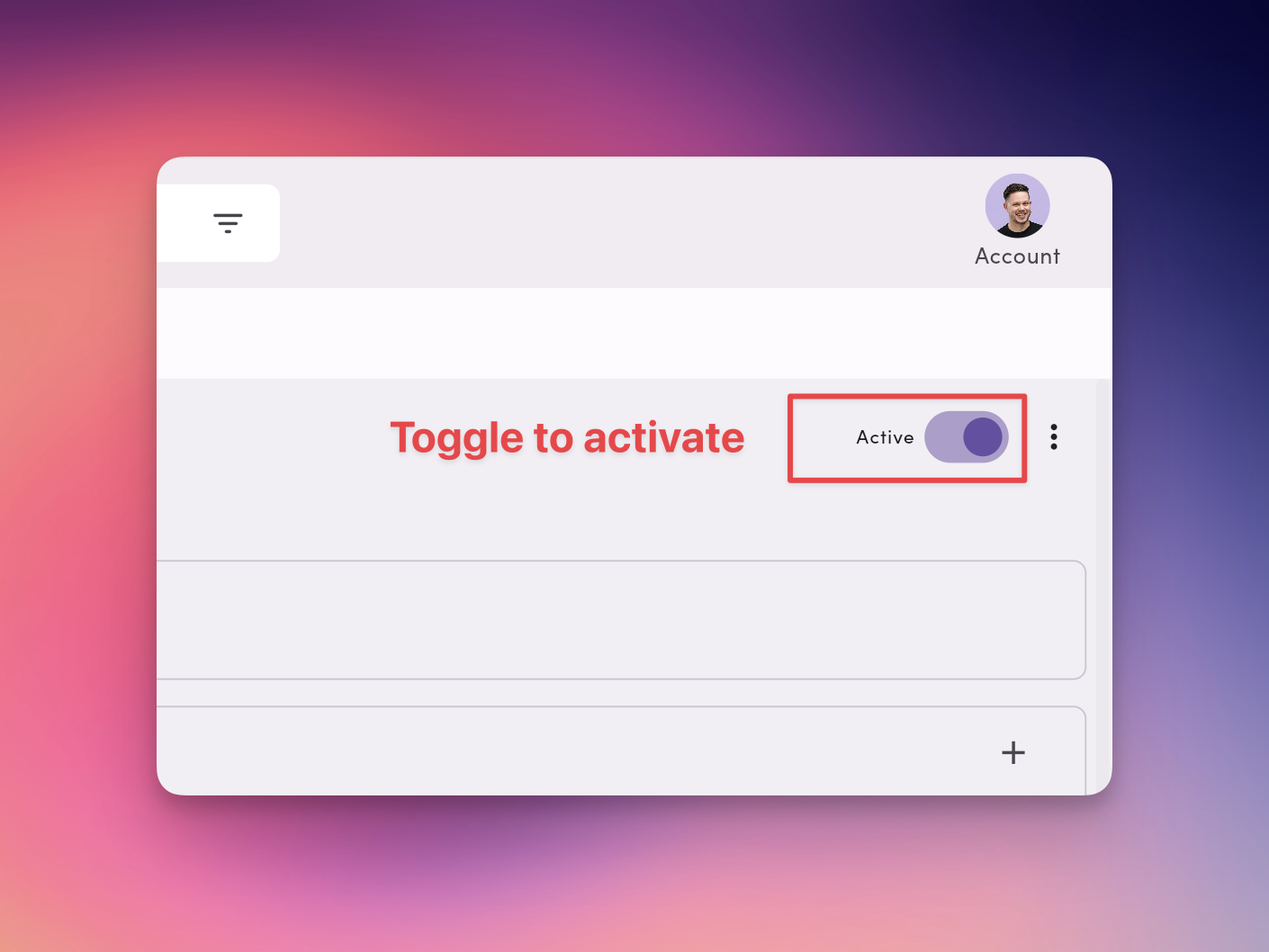
Managing Relays
Pause / resume
- From the list: toggle On/Off
- From details: use the status toggle at the top
Delete
Open the Relay → ⋯ → Delete.Relays and conversation status
When a Relay sends an outbound message, MessageDesk updates the conversation’s status the same way it would for a teammate’s reply. This applies to after-hours auto-replies, out-of-office replies, and any other Relay action that sends a message.Auto-replies don’t mark a conversation as Read. A Relay reply moves the conversation out of the Unread filter and into Replied. The conversation is only marked Read when a teammate opens it. After-hours threads still surface for human review the next morning, even though the customer already got an automated acknowledgement.
Force Read or Unread from a Relay
The default status transitions above cover most flows, but two actions let a Relay set the status explicitly:- Mark Conversation Unread puts the conversation back into the Unread filter after the Relay runs. Add it to an after-hours auto-reply so the customer’s message still queues for morning review instead of sitting in Replied. The shipped After-Hours Auto Reply template uses this action, and Keep Keyword Threads Unread uses it to hold matching keyword threads for review.
- Mark Conversation Read marks the conversation Read as part of the Relay run. Add it to one-shot acknowledgement or auto-close flows (appointment confirmations, delivery pings) where no human review is needed after the Relay sends its reply.
Relays best practices
- Start simple. Test one Relay before scaling across teams.
- Name clearly. Use descriptive titles like
Teammate 1 - Delegation RelayorRegion X,Y, Z Autoresponder. - Test with your phone. Send yourself a message to confirm behavior.
- Combine with templates. Use pre-saved templates to standardize replies.
- Audit regularly. Disable or update Relays as team structure changes.
Frequently asked Relay questions
Do Relays respect roles & permissions?Yes. Assign/Label actions follow your Roles & Permissions settings. Can multiple Relays run on one inbound message?
Yes. Every Relay whose conditions match will run, in the Order you set. See Order your Relays. Can I include media in auto-replies?
Yes. Keep each file ≤ 10 MB (files > 500 KB are sent as links). See Media. How do I avoid duplicate automated replies?
Add a Delay to the Reply action, or narrow conditions (e.g., “Is new conversation”). Does a Relay auto-reply mark the conversation as Read?
No. It moves to Replied, which takes it out of the Unread filter. Only a teammate opening it marks it Read. See Relays and conversation status. What happens if I change the trigger on an existing Relay?
MessageDesk drops any conditions and Event Data inputs the new trigger can’t support, and warns you before you save. See Set a Trigger. Can I set up an out-of-office reply for just one person?
Yes, even on a shared line. Add the Teammate Assigned condition set to the person who’s out. See Reply outside business hours for the build.
Troubleshooting
A Relay didn’t fire- Confirm it’s On (not paused).
- Verify the Trigger matches the event you’re testing. See Relay building blocks.
- Temporarily loosen Conditions (switch
ANDtoOR, remove a filter) to test.
- Add a Delay to your Reply action so back-to-back messages don’t both trigger an instant response.
- Check the target user/label permissions.
- Remove long Delays while testing to see results immediately.
- Review Active hours and the invert setting.
- Check your workspace timezone.